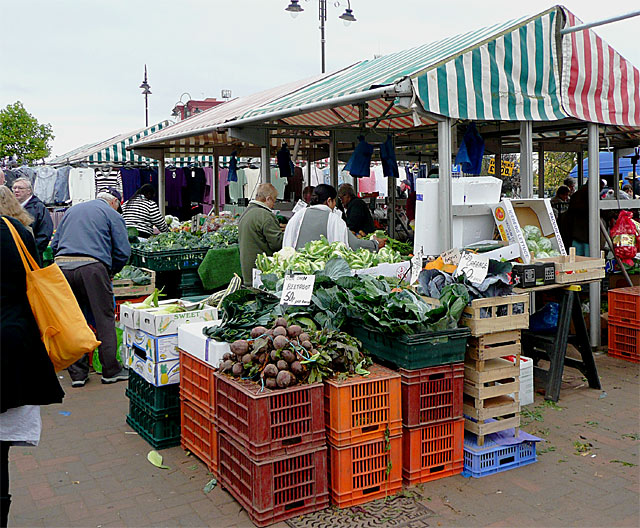
A farmers market operates differently from a grocery store, and the customs that work well in one environment can create friction in the other. Vendors at a farmers market are generally growers, producers, or the people who directly manage both — not employees of a retail business. The transaction involves a different kind of accountability, and the etiquette that has developed around markets reflects that.
Most of what follows is practical rather than prescriptive. These are observations of what tends to work well, not a formal code of conduct. Markets vary by city, region, and management, and the specifics shift accordingly.
Timing Your Visit
Arriving early — within the first hour of opening — offers the widest selection. Popular items like heritage tomatoes, fresh-picked berries, specific cuts from meat vendors, and small-batch preserves sell out quickly at busy urban markets. By mid-morning at a well-attended market, certain stalls may be significantly depleted.
That said, arriving in the final thirty to forty-five minutes before closing has its own advantage. Vendors who drove significant distances are often willing to reduce prices on remaining perishable goods rather than transport them home. This is not universal — some growers maintain consistent pricing and simply return with surplus — but it is common enough to be worth knowing.
The practice of arriving late and expecting discounts on everything is not well-regarded among vendors. What is available at end-of-market depends entirely on what was not sold earlier, and there is no obligation to reduce prices on non-perishables.
Handling Produce
The handling customs at a farmers market differ from those at a grocery store in one important way: at many market stalls, produce has not been sorted and packaged to withstand multiple touches. Bunched herbs, soft-skinned heirloom tomatoes, and ripe peaches bruise or lose fragrance quickly when handled repeatedly.
General guidance on produce handling:
- Ask before picking up something you are not certain you intend to purchase, particularly with soft or fragile items
- Handle delicate items — ripe tomatoes, stone fruit, fresh herbs — by the stem or base rather than the skin
- Do not squeeze produce to test for ripeness; vendors know the condition of their goods and can advise
- At stalls where self-serve is clearly indicated, handle items normally but avoid sorting through bins and displacing produce for others
Most vendors do not expect rigid adherence to these points, but treating a stall's produce as you would something borrowed rather than owned reads as respectful and tends to produce better interactions.
Pricing and Negotiation
Farmers market pricing in Canada is generally fixed. Unlike some market contexts internationally, haggling over standard retail prices at a stall is not a common practice and can be poorly received. Prices at well-established markets reflect production costs, transportation, market fees, and the labour of growing — factors that are often less visible than in a grocery context but no less real.
Acceptable negotiation contexts include:
- Purchasing in bulk — large quantities of processing tomatoes, bulk bags of potatoes, crates of apples for canning
- End-of-market purchases of perishables the vendor will not carry home
- Discussing price when a vendor explicitly offers volume discounts
On Bulk Purchasing
When buying in quantity for preservation purposes, it is courteous to ask in advance whether the vendor can hold an order for a specific week rather than clearing a stall on a busy morning. Many growers appreciate the predictability and will accommodate this for regular customers.
Conversations with Vendors
One consistent characteristic of farmers markets is that vendors can — and often prefer to — explain their products in detail. A grower who spent two seasons selecting a particular dry bean variety for disease resistance, or a cheesemaker who sources milk from three farms specifically for its fat content, has information that is not available from a product label.
Effective questions at a market stall tend to be specific:
- "When was this harvested?" or "How long has this been cut?" — relevant for greens and herbs
- "What is your recommended use for this variety?" — particularly useful for unfamiliar squash, bean, or apple types
- "How long will this keep?" — directly useful, and vendors generally know their products' storage behaviour accurately
- "Is this sprayed?" or "What inputs do you use?" — a reasonable question at any stall, and vendors are generally direct about this whether certified or not
Conversations tend to go better when there is no queue behind you. If a vendor is actively serving several customers, return for a more extended conversation when traffic is lighter.
Payment and Cash
Many small farm vendors at Canadian markets still prefer or require cash. Others accept card payments via mobile point-of-sale terminals. Checking a market's vendor directory in advance — most established markets maintain a website — gives some indication of what payment types are accepted, but this is not always current.
Carrying small bills (fives, tens, and twenties) is practical regardless. Some vendors carry limited change, particularly early in the morning when they have had few sales. Breaking a fifty-dollar bill on a three-dollar bunch of radishes is an unnecessary inconvenience for the vendor.
Children and Dogs
Busy market aisles with mixed surfaces, rolling carts, and crowd movement are worth navigating carefully with children or animals. Many markets permit leashed dogs, but not all — checking market rules in advance prevents having to turn back at the entrance.
Dogs near food stalls should be kept at distance sufficient that the animal is not within reach of produce, baked goods, or open containers. This is both a hygiene consideration and a practical one: food on a low table is attractive to most dogs regardless of how well-trained they are.
Tote Bags and Market Carts
Bringing your own bags is standard and expected. Markets that charge for bags exist, but most vendors simply expect customers to arrive with carrying capacity. A small collapsible cart is useful at markets where you plan to purchase root vegetables or other heavy goods in quantity, and is common enough that navigating with one does not attract attention.
Supporting Regular Attendance
The economics of a farmers market stall are straightforwardly transactional — vendors who do not sell enough to cover their fees and transportation costs do not continue attending. Regular purchasing from specific vendors, particularly during the shoulder seasons when attendance is lower, is the most direct form of support.
Pre-season subscriptions, CSA arrangements offered directly by market vendors, and advance orders are worth asking about if you attend consistently and have a reliable preference for a specific farm's products. These arrangements benefit both parties in different ways and are discussed in more detail in Building Direct Relationships with Local Growers.
For context on what to expect at the stalls in terms of produce timing, see Seasonal Availability at Canadian Farmers Markets.